

Origin of the Pomeranian Breed
The Pomeranian is one of the most adorable small dog breeds, recognized by the Fédération Cynologique Internationale (FCI) as part of the German Spitz family. The breed’s name comes from Pomerania, a region now spanning northeastern Germany and northwestern Poland.
Physical Characteristics of the Pomeranian
Pomeranians have a striking appearance with a wedge-shaped head, large bright eyes, erect pointed ears, a small nose, and a scissor bite. They sport a thick double coat with a long, straight, slightly harsh outer layer and a short, soft, dense undercoat. The coat around the neck and chest grows longer, creating their signature ruff. Coat colors are remarkably diverse: red, orange, cream, white, blue, brown, black, and more. Their plumed tail looks incredibly soft and curls gracefully over the back.
Size and Lifespan
Pomeranians stand 18–24 cm tall (7–9.5 inches) and weigh 1–3.5 kg (2.2–7.7 lb). Their lifespan ranges from 12 to 16 years. These are intelligent, agile dogs capable of performing small tricks with proper training. They’re also deeply loyal, affectionate, and closely bonded with their owners.
Origin of the Pomeranian Breed
The Pomeranian descended from ancient Spitz-type dogs—large herding dogs originating in Iceland. Early Pomeranians were much larger than today’s breed, sometimes weighing around 13 kg (29 lb), and were commonly used for herding sheep.
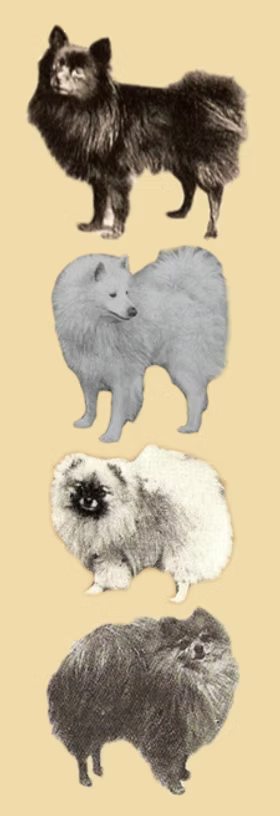
In the late 18th century, the breed was brought to England by Queen Charlotte when she married King George III. Later, Queen Victoria became an enthusiastic admirer and breeder of Pomeranians. She actively bred them down in size, and her efforts made the breed wildly popular throughout England.
Variations of the Pomeranian

From that point, Pomeranians developed into many variations in color, size, and style depending on regional preferences. In countries like the United States, Poms are typically bred naturally (because veterinary costs are very high and cesarean sections are difficult with tiny individuals), so most American Poms tend to be larger and sturdier—3–5 kg (6.6–11 lb). However, in Asian countries like Vietnam, Thailand, and the Philippines, customers prefer smaller Pomeranians, so breeders selectively breed for smaller sizes (often marketed as “mini Poms” or “teacup Poms”).
Important note: Extremely small (teacup) Pomeranians often suffer from heart disease and malnutrition, leading to shorter lifespans. If you’re interested in smaller sizes, research thoroughly and choose a breeder with strong genetics, multi-generational selection, and a commitment to health.
Pomeranian Pricing
Pomeranian prices depend on many factors including origin, documentation, color, size, conformation, and especially the dog’s quality. Research carefully before purchasing a Pomeranian to avoid unnecessary risks.


