
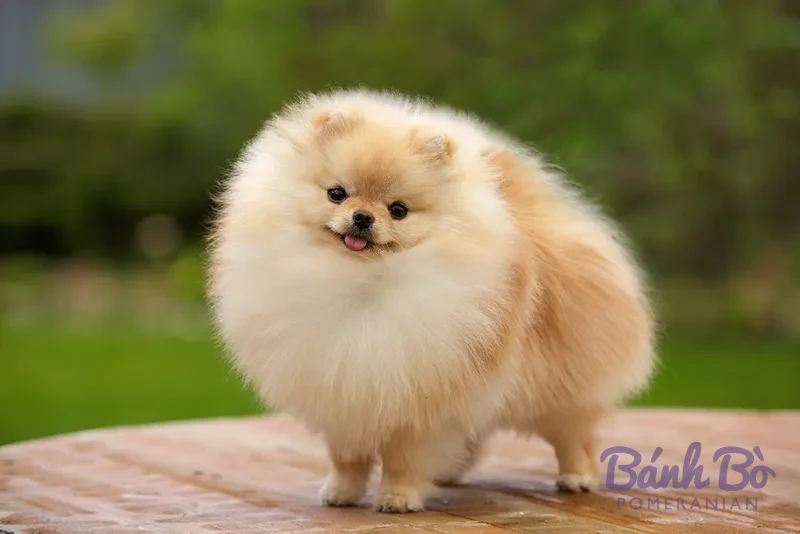
Pomeranian colors: FCI standard chart and colors to reconsider
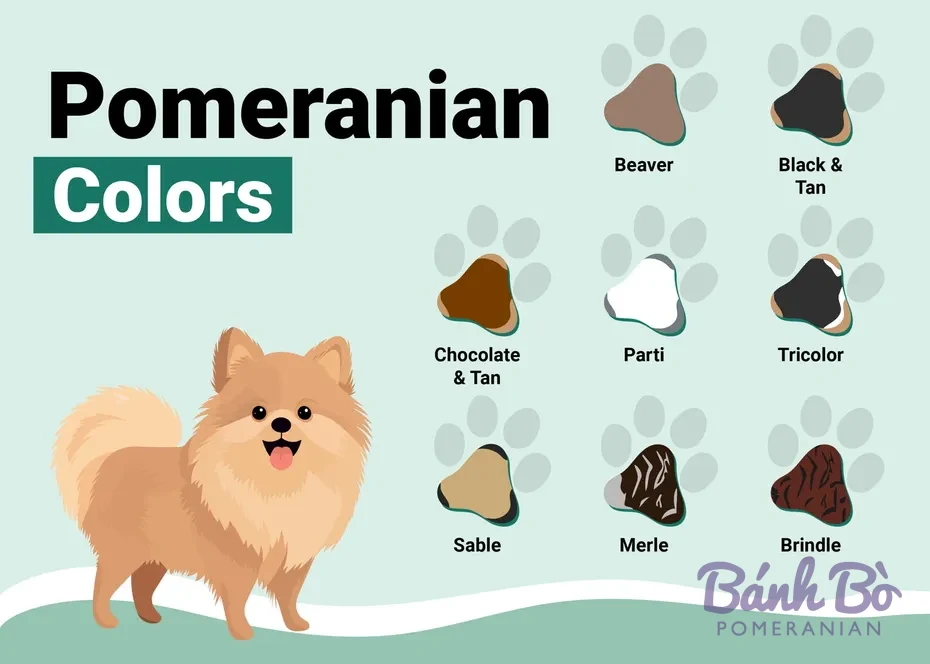
Under the FCI standard, Pomeranian colors include five main colors (white, black, brown, orange and wolf sable, also called grey shaded) plus a group of other colors such as cream, sable, black and tan, and parti color on a white base. At Bánh Bò we breed to the FCI standard, so when we assess a puppy, we check its coat against this exact chart. Popular names online come second.
Color is part of the breed standard too. A beautiful puppy whose color falls outside the chart is not a standard puppy.
Which Pomeranian colors does the FCI standard accept?
FCI Standard No. 97 (the version dated September 20, 2024) classifies the Pom as the smallest breed in the German Spitz group. It accepts white, black, brown, orange, wolf sable and a group of other colors. The other colors are:
- Orange sable: an orange base with black tips on the outer coat hairs.
- Cream and cream sable.
- Black and tan, black and silver, and brown and tan.
- Parti color: the base is always white, and the patches are one solid color from the chart.
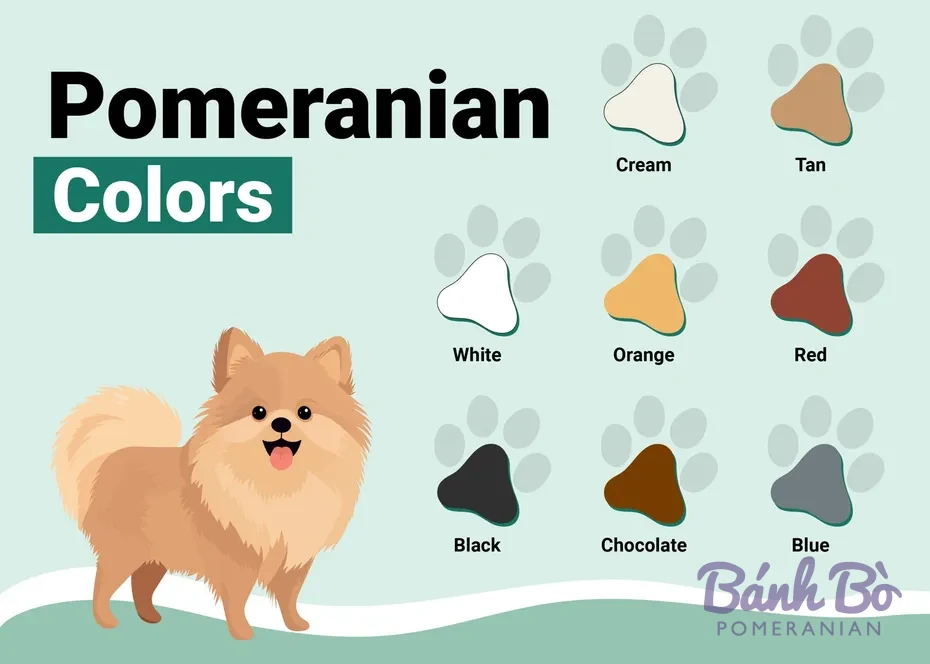
Colors outside the chart, such as blue, beaver and merle, count as faults under the FCI standard. A blue Pom may look striking. Still, it won’t be judged as a standard color at shows run under the FCI system.

Dogster lists as many as 16 colors and color patterns for the Pom because it splits red, tan, blue and beaver into separate entries. The FCI chart has no red or tan. Those shades fall within the orange and cream range, darker or lighter depending on the dog.
What’s the difference between orange, red (deep orange) and cream Poms?
Mostly, it comes down to depth of color. Orange is the most familiar Pom color, and the FCI asks for an even, medium orange that is neither too pale nor too dark. Red is what owners call a deep orange with a rusty tint. It is usually lighter on the chest.
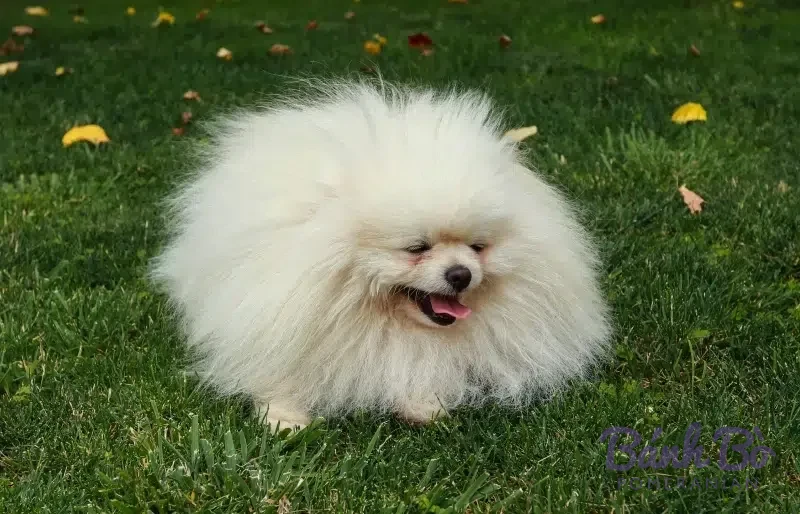
Cream is a pale shade, like honey mixed with milk, with no white patches. According to a dog breeders’ association, cream Poms are often born nearly white and darken as the outer coat gets coarser. Shed cream hair shows up easily on sofas and clothes. Brush your Pom consistently.
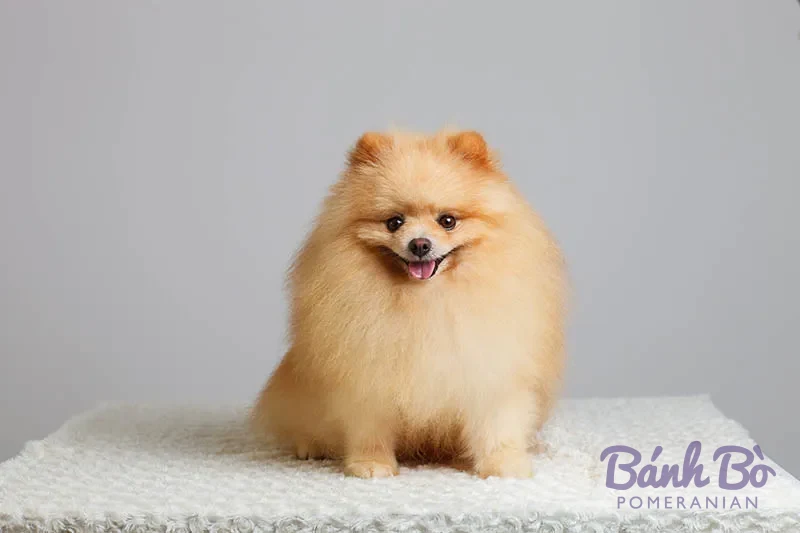
No breeder can guarantee that a puppy will turn red (deep orange) as an adult. At a few weeks old, nobody knows yet. A breeder who promises red for a puppy that young is promising something no one can see.

Is it hard to keep a white or black Pom’s color in Vietnam?
Yes, and each color has its own challenge. For a white Pom, the FCI calls for a pure white coat and allows only a slight yellow tinge, most often seen on the ears. The nose, lips and eye rims must still be black.
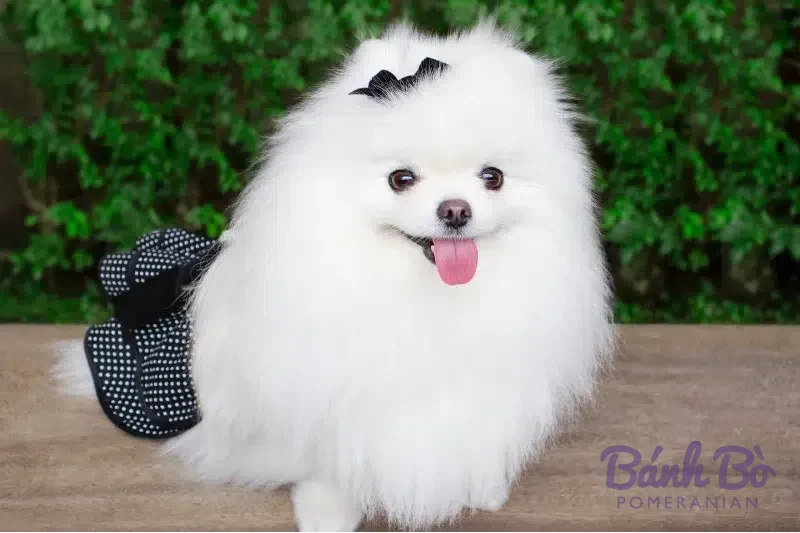
Vietnam’s hot, humid climate dulls a white coat and turns it yellowish if the dog stays wet for long. After every bath, blow-dry your Pom right down to the undercoat next to the skin. Drying the outer layer alone is not enough. A damp undercoat gives fungus and odors a place to settle.
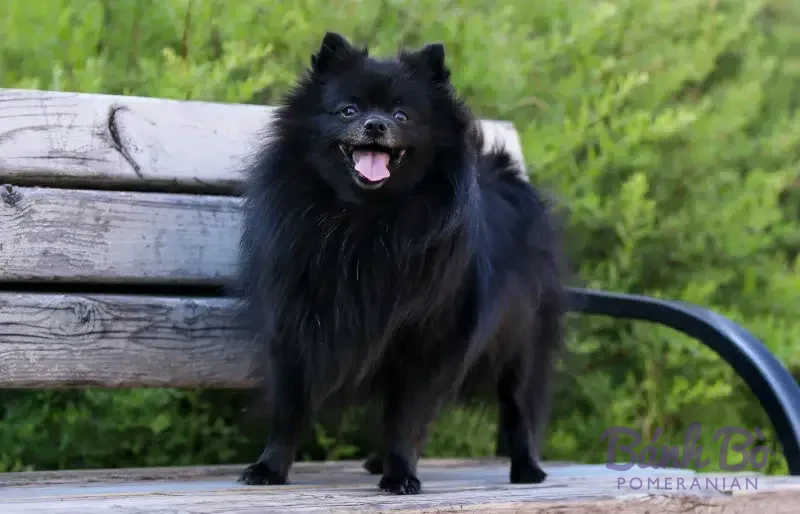
An FCI-standard black Pom must have a black undercoat, black skin and a glossy black outer coat with no white markings. Dogster notes that a lot of sun exposure can gradually fade a black coat to reddish brown. Here in Saigon, the sun is harsh almost all year. Walking your Pom in the early morning or late afternoon helps protect the coat color and lowers the risk of heatstroke.
What do two-tone, sable and wolf sable Poms look like?
This group has two shades in one coat. What sets them apart is where the second shade sits.
Black and tan
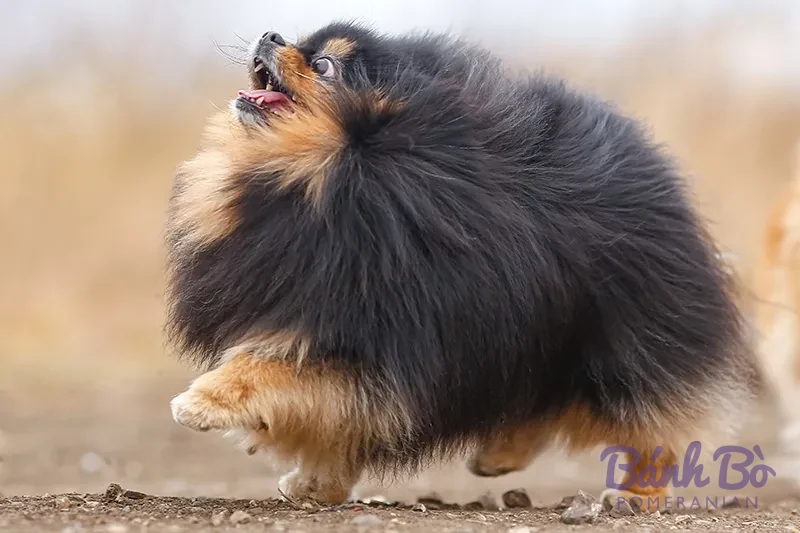
A black and tan Pom has a deep black base with tan markings above the eyes and on the muzzle, throat, chest, legs and under the tail. The line between the two colors matters. The cleaner it is, the crisper the coat looks.
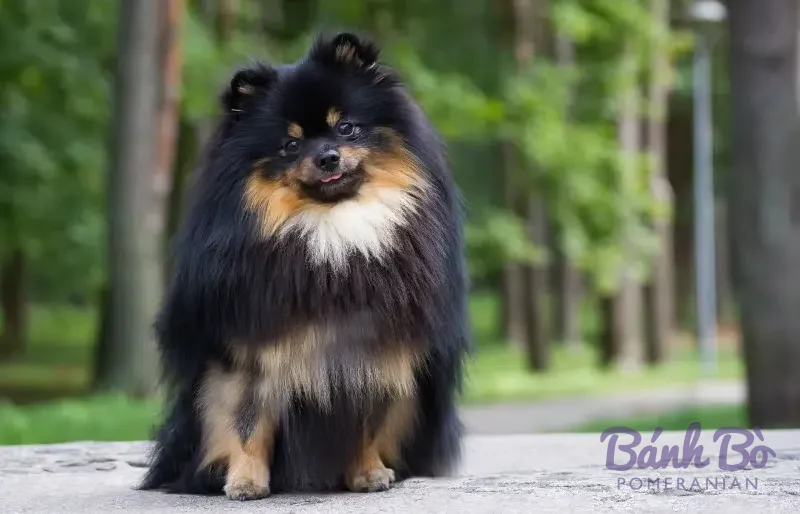
From a distance, many owners mistake a black and tan puppy for a solid black one. Look closely above the eyes and under the tail. You’ll tell them apart right away.
Parti color on a white base
A parti Pom always has a white base. The patches must be a single color from the FCI chart, such as black, orange or cream, and should be spread over the body. White with black patches is easiest to spot.
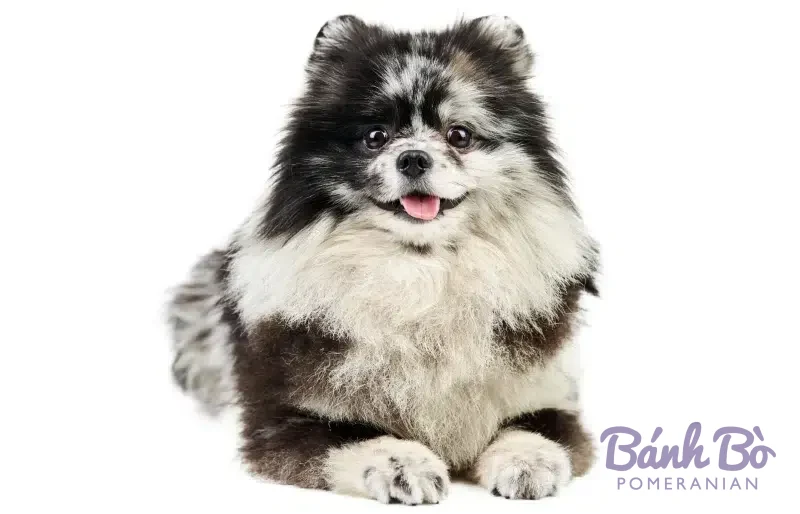
Cream or pale orange patches on white can be hard to tell apart from a cream Pom with a white chest. In that case, check the VKA pedigree. The parents’ colors recorded there help pin it down.

Wolf sable and sable
Wolf sable has a silver-gray base and black tips. Sable is an orange or cream base with black hair tips, which create a darker streak along the back and tail.

In puppies, sable can still change. After a coat change, the dark streak on the back may fade or become more defined.

Does a Pomeranian puppy keep the same color as an adult?
Usually not entirely. Orange puppies often start pale and darken over time, cream Poms are born nearly white, and red puppies almost always shift shade as the puppy coat gives way to the adult coat.
During the puppy coat change, your Pom may look scruffy and patchy in color for a while. This is normal. The adult coat usually grows in afterward. If your puppy loses hair in bare patches, itches a lot or has red skin, take your puppy to a veterinary clinic.

That’s why we never promise a puppy’s adult color. What you can see is the puppy’s current color, plus the colors of its parents and earlier generations in the pedigree. If you get the chance, meet the puppy’s parents in person.
Should you choose a blue, beaver or merle Pom?
Think it over carefully. Health matters here as much as the FCI standard does. Blue and beaver are diluted colors caused by the dilute gene, and according to the Merck Veterinary Manual, this gene is linked to color dilution alopecia.


A puppy with this condition is born with a normal coat. Before 1 year of age, the blue or light brown areas develop inflamed hair follicles and start to thin. Not every blue Pom gets it. But so far, there is no cure.
If your Pom has a dilute color and the hair in those areas turns dry, breaks, thins in patches or shows red bumps, take your Pom to a veterinary clinic for a skin exam, and don’t buy creams on your own. Fungal skin infections and demodectic mange cause similar hair loss. Only a veterinarian can tell them apart.
Merle is a mottled coat pattern caused by the merle gene. When two dogs carrying this gene are bred together, the puppies are at risk of eye and ear defects. Merle isn’t on the FCI color chart either.
Want to see the Poms we currently have at the kennel before you choose one to bring home? chat with us on WhatsApp and we’ll walk you through each puppy’s color and its parents’ pedigree.
Medical information in this article was reviewed by veterinarians at Home Pet Veterinary Clinic on October 14, 2026.


