
Pomeranian Hair Loss – Causes and Effective Prevention Tips
The thick, fluffy double coat is the Pomeranian’s most striking feature. Yet many owners worry when their Pom sheds heavily or develops patchy bald spots. With over 10 years working with this breed, I understand how crucial it is to distinguish normal shedding from medical hair loss.

When is Pomeranian hair loss normal?
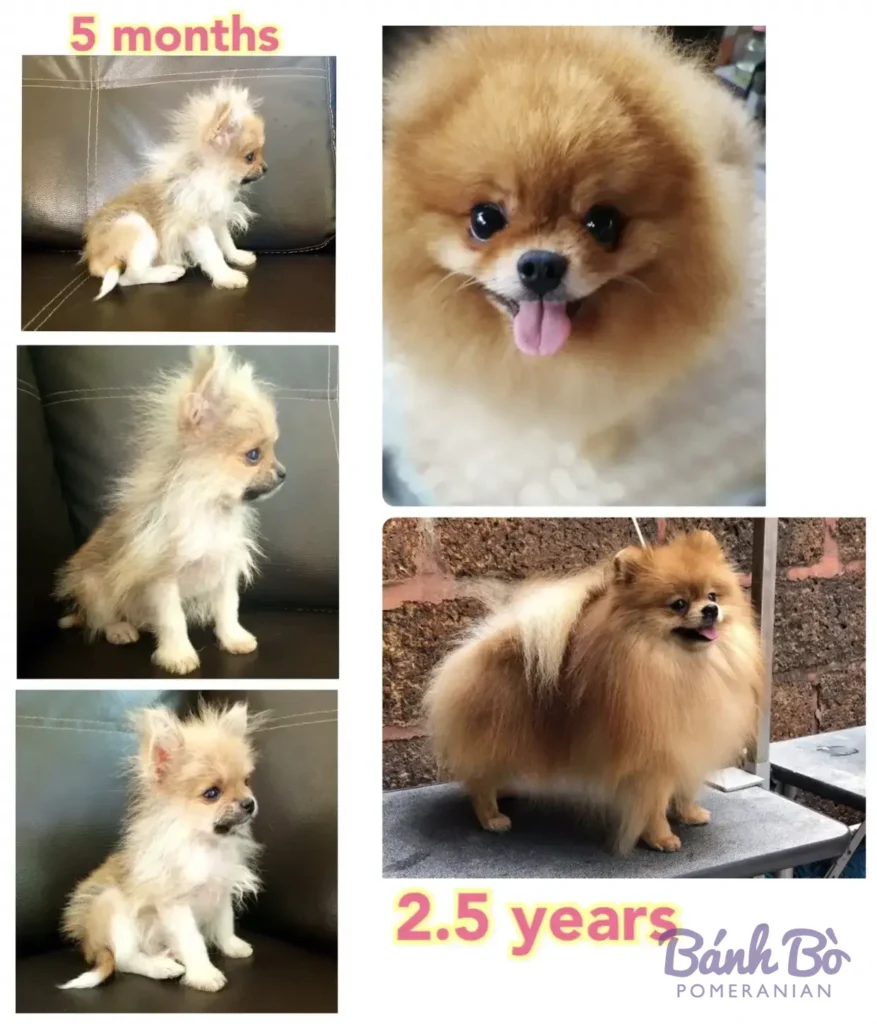
Most Poms go through a dramatic “puppy uglies” stage when their coat changes noticeably between 4 and 6 months of age. This is when they transition from soft puppy fluff to the adult double coat.
The puppy uglies phase
The puppy coat starts shedding while the adult coat grows in, making the fur temporarily look thin, patchy or scraggly. First-time owners often panic at this sight, thinking their puppy is sick.

This phase typically begins at 4–6 months. Your Pom will start looking normal again around 10 months, and the coat continues filling out until 12–15 months of age. During this time, brush gently and regularly to remove loose hair and stimulate new growth. Never clip or shave the coat during this stage.
Seasonal shedding
Like many double-coated breeds, Pomeranians typically shed more heavily in spring and fall. In spring, they drop their thick winter coat to prepare for warmer weather. In fall, they shed old hair to grow a denser coat for cold months. However, in Vietnam’s hot, humid climate, this cycle may be less pronounced than in temperate countries.
Regular brushing during these periods removes dead hair, keeps skin ventilated and reduces the risk of skin problems.
When to worry: Abnormal hair loss causes
If your Pomeranian is losing hair abnormally—with noticeably thinning fur, bald patches or irritated skin—this may signal a health problem.

Hormonal issues
Hypothyroidism typically causes hair loss mainly on the body, without itching or redness. Dogs with hypothyroidism may lose hair symmetrically on both sides of the back, and also on the tail, giving it a “rat tail” appearance. The coat becomes dry and brittle, skin darkens, and the dog may seem lethargic and gain weight. Blood tests are needed for accurate diagnosis.
Cushing’s disease, caused by excess cortisol production, also causes hair loss concentrated on the trunk, along with a pot belly, increased drinking and urination, and thin skin. Diagnosing this condition is complex and requires thorough veterinary examination.
Parasites
Mites and fleas can cause severe itching, making dogs scratch, bite and lick constantly, leading to hair loss and skin damage. Demodex mange typically causes patchy hair loss, especially around the eyes and legs. Sarcoptic mange is extremely itchy and highly contagious. Your veterinarian needs to perform skin scrapings for accurate diagnosis.
Allergies
Poms can be allergic to food, pollen, dust or environmental chemicals. Symptoms typically include itching, skin inflammation and hair loss, especially on the face, ears, paws and rear end. Identifying the allergen requires patience and close collaboration with your veterinarian, possibly including food elimination trials.
Skin infections
Bacterial or fungal infections often show up as circular bald patches, scaly skin and redness. Without timely treatment, infections can spread.
Poor nutrition
A diet lacking essential fatty acids, vitamins and minerals directly affects coat health. The fur becomes dry, brittle and sheds easily. Choosing high-quality, nutritionally balanced food is essential.
Improper grooming
Shaving a double-coated dog like a Pomeranian close to the skin can cause only the undercoat to grow back—too thick and non-breathable—while also making the dog vulnerable to sunburn and overheating. In some cases, the coat may take 12 to 24 months to fully regrow.
Using inappropriate shampoo or brushing too roughly can also break the hair. For Poms especially, close shaving can permanently damage the inner undercoat’s ability to regrow properly.
Alopecia X (Black Skin Disease) in Pomeranians
The exact cause remains unknown, which is why it’s called Alopecia X—hair loss of unknown origin. The condition typically begins when dogs are 1.5 to 2 years old, though it can appear at any age.

Characteristics of Alopecia X
- Hair loss is usually gradual, symmetrical and non-itchy, often starting at the tail, rear thighs or trunk and spreading outward
- Hair on the head and front legs is typically spared
- Skin in the affected areas may gradually darken as hair is lost—hence the name “black skin disease”
- This condition usually doesn’t cause itching or discomfort

Diagnosis and treatment
No test can definitively diagnose Alopecia X—it’s a diagnosis of exclusion, meaning your veterinarian must evaluate your dog and rule out other causes of hair loss first. The vet will thoroughly check for hormonal issues, parasites, allergies and many other factors.
Currently, no treatment guarantees 100% success. Some approaches may be tried under veterinary supervision, such as spaying/neutering, melatonin supplementation or specialized hormone protocols. Results can vary widely between individual dogs.
Practical experience at Bánh Bò Pomeranian
Through over 10 years working with Poms, I’ve found that most cases of black skin and hair loss are due to improper care: shaving too close, poodle-style clips cut too short, diets with excessive protein or mineral imbalances. Additionally, hormonal imbalance—especially elevated DHT—is an important factor.
The most important thing is not to attempt home treatment. When you notice abnormal hair loss in your Pom, take them to a veterinarian immediately for proper examination and diagnosis.
How to prevent abnormal hair loss in Pomeranians
- Never shave close to the skin or clip too short. Brush regularly instead of cutting short
- Provide balanced nutrition appropriate for your individual dog’s needs. Avoid excessive protein or mineral deficiencies
- Use dog-specific shampoo suitable for Pom’s sensitive skin
- Brush properly and gently, avoiding rough brushing that breaks hair
- Schedule regular health checkups, especially for thyroid and hormones
- Keep the living environment clean, well-ventilated and stress-free
If you need advice about care routines, nutrition or any health issues related to your Pomeranian, don’t hesitate to chat with us on WhatsApp. With over 10 years specializing in this breed, we’re always ready to help you care for your Pom properly.


