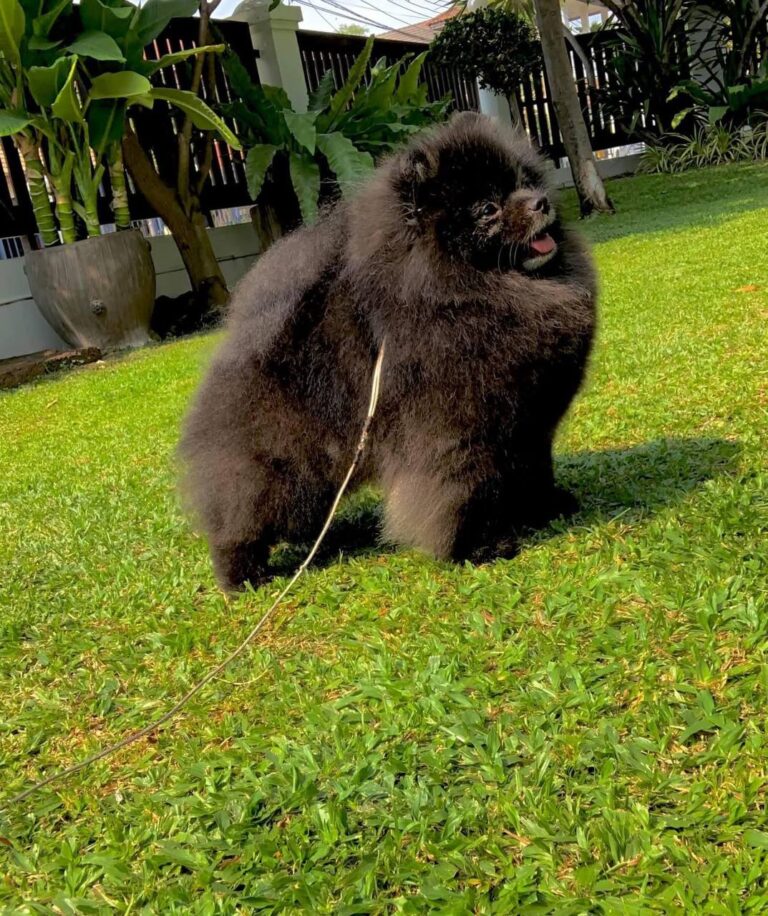
How Much Do Pomeranians Shed? Understanding the Pom Shedding Cycle
Many people worry that Pomeranians will shed heavily because of their fluffy coat. In reality, Poms shed moderately — far less than their appearance suggests. The secret lies in the double-coat structure: when the soft undercoat sheds, it usually gets trapped by the longer outer guard hairs instead of scattering all over your house like short-haired breeds do. Most shed fur comes out when you brush, not when your dog walks around the house.
At our kennel since 2012, I’ve seen many first-time Pomeranian owners surprised by how clean their homes stay. But to achieve that, you need to understand this breed’s natural shedding cycles and know how to brush properly at each stage.

Do Pomeranians Shed a Lot?
Pomeranians shed moderately, not nearly as much as people assume when they see that thick coat. The biggest difference between Poms and short-haired breeds is that shed fur doesn’t fall directly onto floors or stick constantly to your clothes. The long outer coat traps most of the dead undercoat, and you’ll remove it during brushing instead of picking it off your sofa.
Shedding volume varies greatly depending on your dog’s life stage. A Pom might shed very little for months, then suddenly blow a significant amount of coat when entering a new cycle. Factors include age, sex, hormones, weather, and whether your dog lives indoors with air conditioning or outdoors.
Three Main Shedding Phases in Pomeranians
Pomeranians go through three distinct shedding phases during their lifetime. Understanding each phase helps you prepare mentally and care for your dog properly, instead of panicking when you see sudden heavy shedding.
Puppy Coat to Adult Coat Transition
This phase typically begins when your Pom reaches 4–6 months old. The soft, short puppy coat gradually sheds to make room for the adult double coat: dense undercoat inside and longer guard hairs outside. This process unfolds slowly over several months, not overnight.
During coat transition, many Pomeranians look temporarily less attractive — people call it the puppy “uglies” stage. Coat on the face and body shortens while the head, legs, and tail still have patchy long fur. Don’t worry, this is completely normal. At our kennel, most puppies start looking beautiful again around month ten, and the full adult coat is usually complete by 12–15 months of age, sometimes longer.
Coat color can also change during this phase. A deep orange puppy might lighten to bright orange as an adult, or vice versa.
Seasonal Shedding in Adult Dogs
After the adult coat stabilizes, Poms shed lightly year-round and more heavily during two main periods: spring and fall. In spring, Pomeranians shed the thick undercoat that kept them warm through winter. In fall, the coat adjusts again to prepare for cold weather.
However, in Vietnam — especially in Ho Chi Minh City where our kennel operates — this cycle isn’t as pronounced as in countries with four distinct seasons. Dogs living indoors with air conditioning and artificial lighting around the clock shed less and more evenly instead of concentrating it into one heavy blow. Artificial light and stable temperature make the dog’s body “forget” natural seasonal signals.
Seasonal shedding should occur evenly across the body, not leaving completely bald patches. If you see red skin, itching, or patchy hair loss, that’s not normal — take your dog to the veterinarian.

Hormonal Shedding in Females
This is the heaviest shedding phase, occurring only in unspayed females. Female Pomeranians may shed after coming into heat, but the most dramatic shedding happens after giving birth and nursing puppies.
Typically when the litter reaches about 6–8 weeks old, the mother starts shedding heavily. She can lose most of her undercoat and look noticeably deflated compared to before pregnancy. Many first-time owners witnessing this get frightened, but it’s a completely normal hormonal response.
The full coat will grow back, but it takes time. Usually six months or longer, depending on overall health, nutrition, and how much coat she had before whelping. At our kennel, we always ensure nursing mothers receive complete nutrition and rest after weaning so their coats recover optimally.
Why Is Your Pomeranian Suddenly Shedding Heavily?
If your Pom suddenly sheds more than usual, first check whether it’s one of the three natural phases above. If not, possible causes include:
- Stress or major changes in routine
- Poor nutrition or nutritional deficiencies
- Fleas, ticks, or other parasites
- Skin allergies or skin infections
- Thyroid disorders or other hormonal issues
- Bathing too frequently or using inappropriate products
- Coat damage from improper brushing or grooming
- Medical conditions affecting hair growth cycles
There’s an important difference between natural shedding and abnormal hair loss. Natural shedding doesn’t cause discomfort, doesn’t leave red or inflamed skin. If you see obvious bald patches, itching, flaking, unusual odor, or your dog seems unusually lethargic, take them to the veterinarian immediately. Don’t attempt home treatment without knowing the exact cause.
How to Brush Properly to Reduce Shedding Indoors
Regular brushing is the most effective way to control Pomeranian shedding. Because shed undercoat gets trapped in the guard hairs, if you don’t brush consistently, it will mat, form tangles, and eventually fall out in large clumps.
During heavy shedding phases, brush daily or every other day. Work in small sections, brushing from the skin outward. Pay special attention to areas that mat easily: behind the ears, under the front legs, around the neck, belly, rear thighs, and tail.

Tools you need:
- Large soft slicker brush to separate coat and remove shed undercoat
- Quality pin brush for finishing
- Metal comb with wide teeth to check for mats close to the skin
- Professional dryer to blow out loose undercoat after bathing
Always spray a light coat conditioner before brushing — never brush completely dry coat. This reduces static, minimizes guard hair breakage, and protects coat structure. Bathing with quality dog shampoo and conditioner also helps loosen dead undercoat. After bathing, you must blow-dry completely while brushing section by section — this is when you’ll remove the most shed fur.
Never shave or cut your Pomeranian’s coat short to “reduce shedding.” Cutting the coat doesn’t stop the natural shedding cycle and can damage the double-coat structure, causing poor or uneven regrowth.
Does Pomeranian Hair Fall Out Around the House?
Yes, Poms still shed indoors, but not like short-haired breeds. You won’t see individual short hairs stuck all over your clothes and furniture daily. Instead, you might find small tufts of soft undercoat on carpets or your dog’s bed, especially during heavy shedding periods.
To reduce indoor shedding:
- Brush regularly before undercoat has a chance to fall on floors
- Brush outdoors when weather permits
- Wash your dog’s bedding frequently
- Use a lint roller on clothes and furniture
- Vacuum regularly with a pet-specific vacuum
- Bathe and dry thoroughly during heavy shedding periods
At Bánh Bò Pomeranian, I always provide detailed brushing instructions for each puppy before they go to their new homes. For puppies being exported to the USA or Canada, we also prepare their coats carefully so they look their best when they arrive. If you’re raising a Pom or learning about this breed, feel free to chat with us on WhatsApp for specific advice based on your dog’s coat condition.